


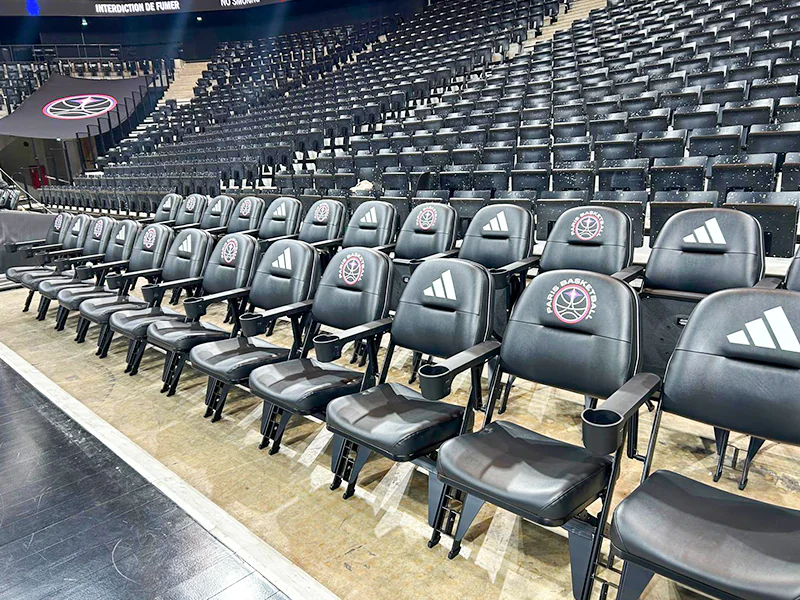
As stadiums and arenas increasingly compete to attract concerts, sporting events and other entertainment, the ability to adapt seating configurations quickly and efficiently is becoming an important factor in venue operations and commercial performance.
Modern multipurpose venues must accommodate everything from basketball games and concerts to boxing events, corporate functions and other entertainment formats. Each event requires different seating arrangements, presenting operational challenges involving installation time, storage, floor protection, spectator safety and revenue optimisation.
Spec Seats International, a US-based portable seating specialist established in 1925, believes that portable seating should no longer be considered simply a functional requirement, but an integral part of a venue’s commercial strategy. The company reports that more than 20 million seats are in use worldwide, with its seating systems used by teams and arenas associated with EuroLeague Basketball, the NBA, MLS, USL, the NFL and MLB.
The company advocates individually connected premium chairs as an alternative to conventional beam-mounted systems, where several seats are permanently attached to a single metal frame.
Spec Seats’ individual seating systems provide greater flexibility when accommodating irregular floor layouts, curved aisles, media positions and accessible seating requirements. Their compact storage and lighter handling requirements can also help reduce operational costs during event changeovers.

Creating additional seating capacity
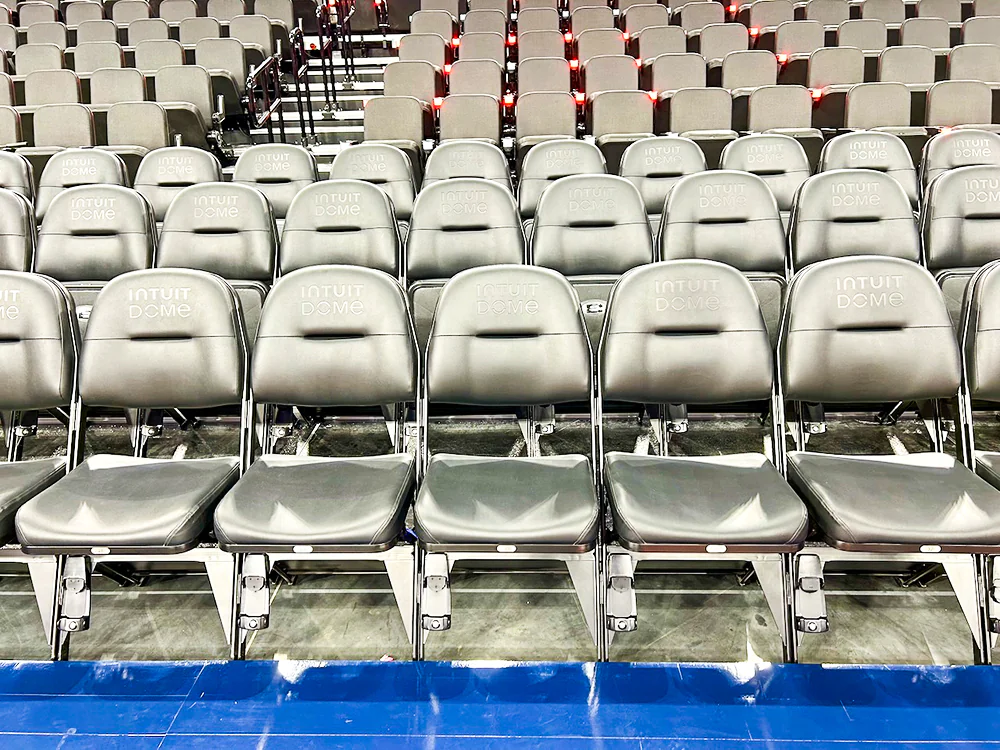
One example highlighted by the company is Intuit Dome in Inglewood, California, home of the NBA’s Los Angeles Clippers.
The arena uses individual portable seating to accommodate different event configurations and make use of spaces that might otherwise remain underutilised.
Spec Seats’ flexible seating arrangements have enabled the venue to introduce approximately 300 additional premium seats by adapting layouts around existing architectural features and previously unused areas.
For venue operators, such additional capacity can translate directly into increased ticket revenue without requiring permanent structural modifications.
Turning seating into a commercial asset
Beyond operational flexibility, portable seating can also create additional sponsorship and premium hospitality opportunities.
Individual chairs can incorporate interchangeable branding, allowing venues to offer event-specific sponsorship packages or branded seating arrangements for concerts, tournaments and other major events.
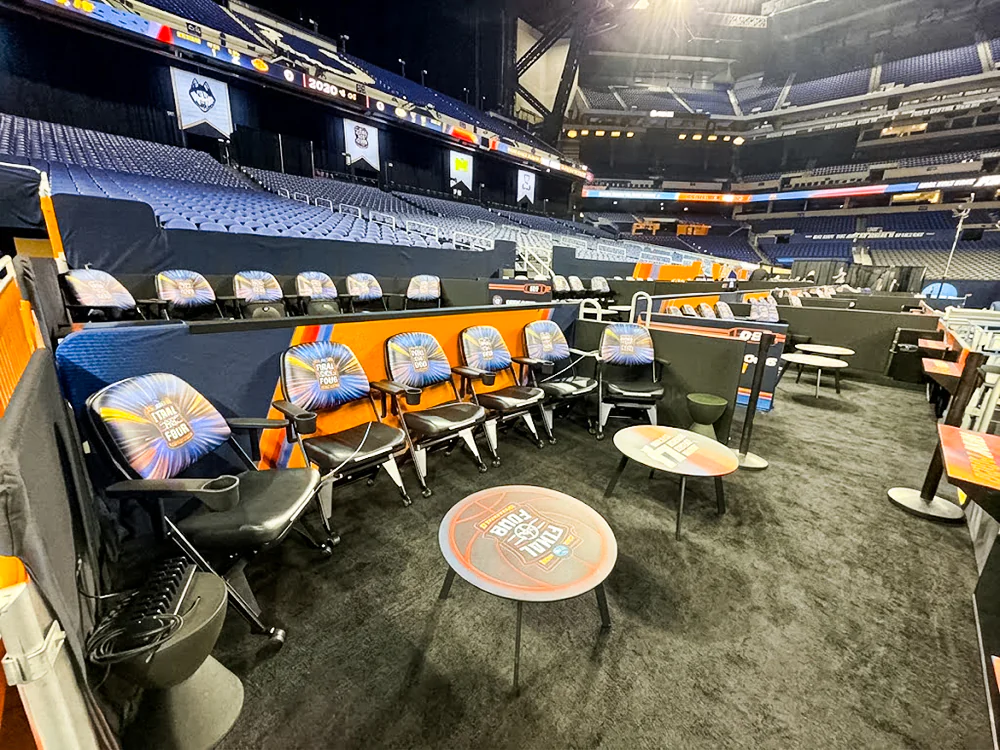

The NCAA Basketball Tournament and Elton John’s Farewell Yellow Brick Road tour serve as examples of how Spec Seats’ specially branded chairs can become part of premium ticket packages. At the NCAA tournament, the company’s branded chairs are used on team benches and in locker rooms, luxury suites and floor-level spectator seating areas.
Improving operations and safety
Portable seating systems also influence the speed and cost of venue conversions.
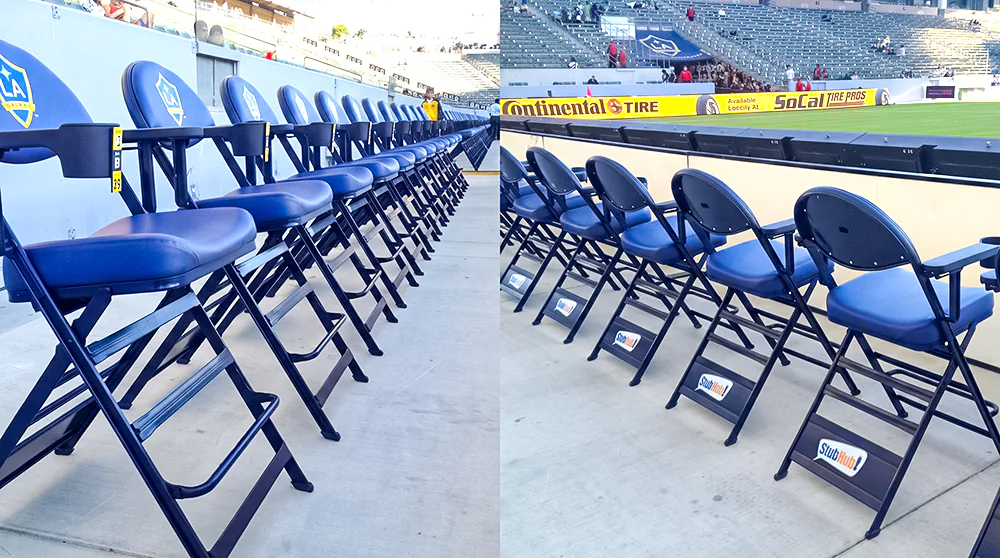
The advantages of Spec Seats’ X-frame folding chairs include compact storage, individual replacement, floor-protecting feet and interlocking mechanisms designed to maintain seating alignment.
The company also offers chairs of different heights, which can provide alternative sightline arrangements in certain configurations without requiring conventional temporary riser structures.
Safety remains another consideration. Spec Seats’ folding mechanism is designed to allow chairs to collapse under pressure, potentially reducing obstructions during emergency situations.
However, seating configurations and safety features must always be assessed against applicable building regulations, accessibility requirements and emergency evacuation standards.
A European example
At Adidas Arena in Paris, which hosted events during the 2024 Olympic Games, portable seating was used to address courtside configuration requirements.
Spec Seats’ individual seating system helped accommodate restricted spaces while meeting local safety requirements and providing additional branding opportunities.
The company estimates that the investment could achieve a return on investment within two to three years, supported partly by sponsorship revenue.
Looking beyond the purchase price
For stadium and arena operators, the wider financial implications of portable seating extend beyond the initial equipment investment.
Storage requirements, installation labour, maintenance, venue conversion times and the ability to accommodate additional spectators can all influence the long-term economics of a seating system.
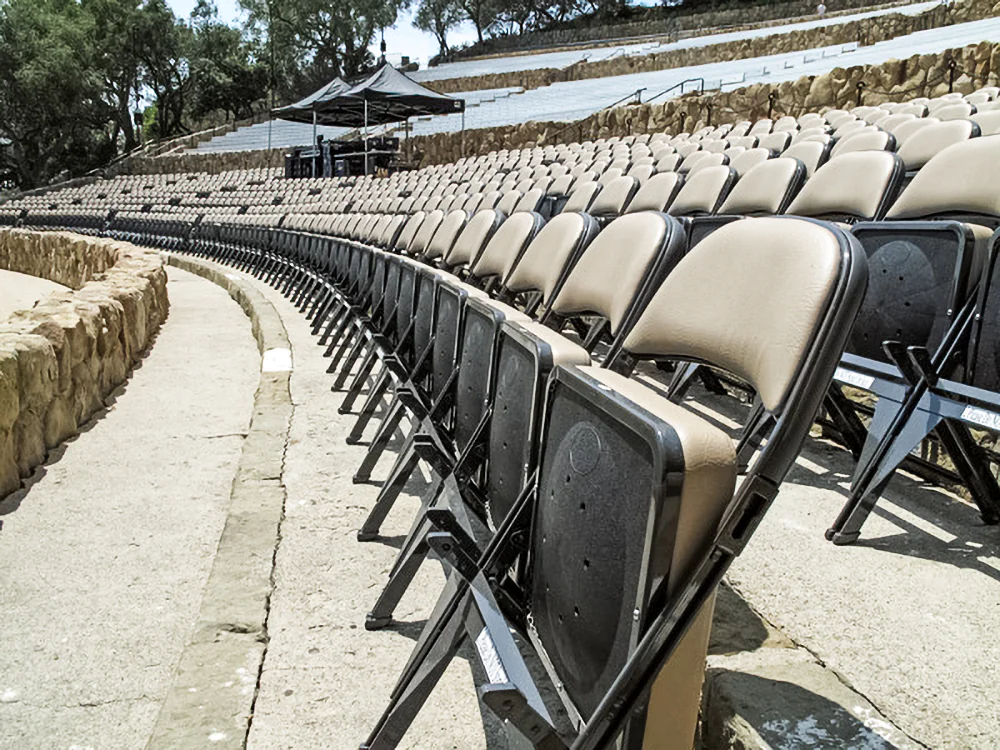
With sports and entertainment venues increasingly focused on maximising utilisation throughout the year, flexible seating represents another opportunity to improve operational efficiency and generate revenue from existing facilities.
The challenge for venue operators is to evaluate seating not simply as equipment, but as part of a broader strategy to improve flexibility, commercial performance and the spectator experience.
Continue following Coliseum for the latest updates on sports venues, stadiums and arena business news worldwide.
Coliseum is dedicated to building a global community of sports and entertainment venue professionals helping create better and more profitable venues.
Become a member of the Global Sports Venue Alliance and connect with stadiums, arenas and industry experts from around the world. Apply for membership through the Global Sports Venue Alliance and access the 365Coliseum Business platform.