


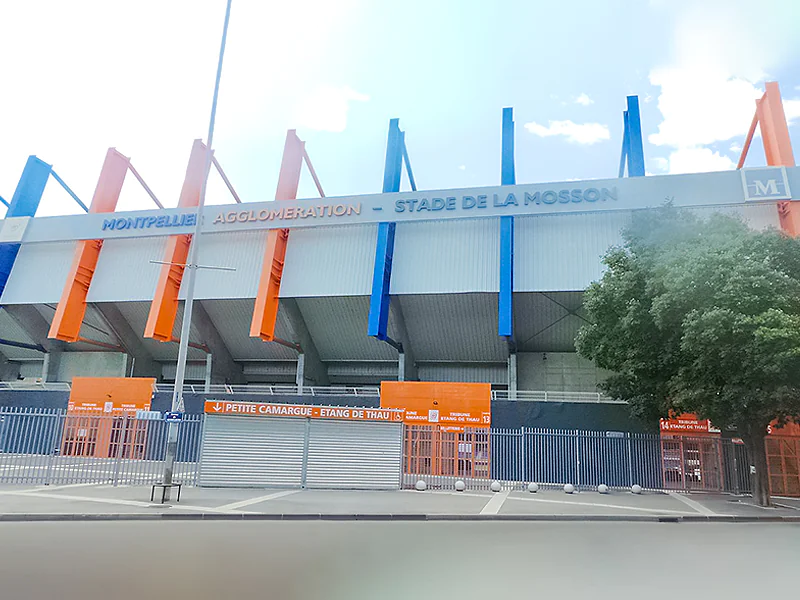
French Ligue 2 football club Montpellier (MHSC) looks set to remain in its Stade de la Mosson< home after a project to build a new stadium for the team seems to have been abandoned.
Montpellier had been planning to build a brand-new 25,000 capacity stadium – Stade Louis-Nicollin – on the southern outskirts of Montpellier (France) on the Ode à la Mer site in Pérols.
But Midi Libre said Jean-Pierre Rico, mayor of Pérols and vice-president of the metropolitan area, recently announced that the stadium project would not go ahead in his town.
He said the MHSC will remain at La Mosson, which he believes is set to be approved for renovation.
Montpellier Hérault Sport Club, commonly referred to as Montpellier HSC, is a French professional football club based in Montpellier, Occitanie, France. The club’s origins date back to 1919, but it was officially founded in 1974 through a merger of both Stade Olympique Montpelliérain and AS Paillade.
Montpellier is owned by Laurent Nicollin, the son of Louis Nicollin, a French entrepreneur, who had been owner since 1974.
The 20,000 seat Stade de la Mosson has been MHSC’s home since it opened in 1972.
Mayor Rico said, “Since I’m not involved in the process, I’ll tell you what’s going on. The future football stadium will be in La Mosson.”
Rico suggested that €70 million has been set aside for the renovation but he says he intends to vote against the idea of renovating the existing stadium rather than building a new one in Pérols.
For his part, the mayor of Montpellier, Michaël Delafosse, has reiterated that he will reveal more details on the situation in October.
While the Mosson stadium appears to be a serious option once again to host the MHSC players for a few more years, the question is: what to do there? A minimal renovation while a new location is found, or a more ambitious project? The budget is obviously not the same.
And then there’s the eternal risk of flooding since a quarter of the stadium is located in the Mosson River flood zone.
Here too, the cost for protecting the stadium varies depending on whether it involves building a dike, creating a drainage system, or even raising the pitch.
And above all, the state will have the final say. Will the prefect agree to changes to the stadium, which is located in a flood zone? In short, nothing seems to have been decided yet.
Continue to follow Coliseum for latest updates on venues business news. Coliseum is dedicated towards building the best global community of sports and entertainment venue executives and professionals creating better and more profitable venues.
Become a member of the only Global Sports Venue Alliance and connect with stadiums, arenas and experts from around the world. Apply for membership at coliseum-online.com/alliance and make use of the 365Coliseum Business.