


Everton Football Club saw a record turnover of £196.7 million ($264.6 million) for the 2024/25 season, driven by continued growth across commercial and matchday income streams.
Everton said in the club’s recently released annual report and accounts that this was up £9.8 million on the previous year, while losses were significantly reduced at £8.6 million for the financial period.
The Premier League club said, “The results for the period ending 30 June 2025 demonstrate substantial financial progress, with losses reduced from £53.2 million in 2023/24, reflecting a year of stabilisation, growth and structural reset for the Club.”
Everton Football Club is a professional association football club based in Liverpool, England (UK). The club competes in the Premier League, the top tier of English football.
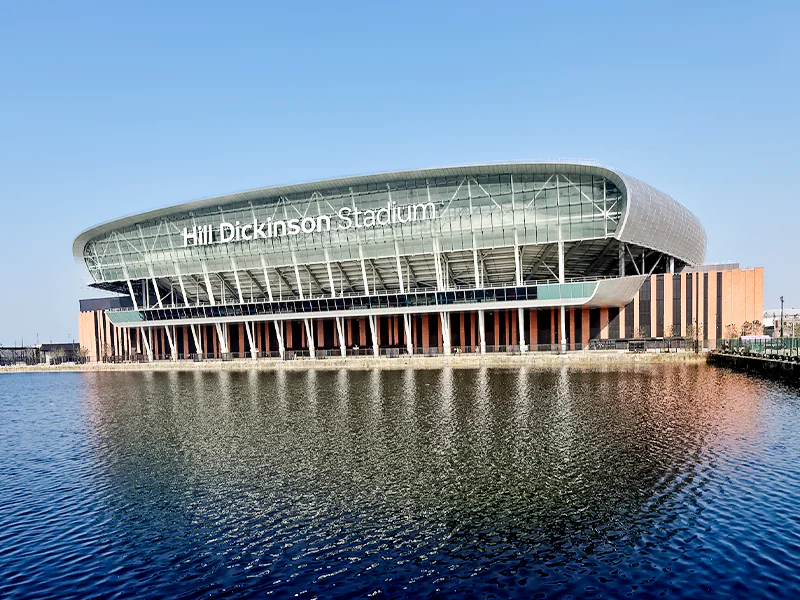
The 52,769-capacity Hill Dickinson Stadium, known as Bramley Moore or Everton Stadium during construction, is a football stadium at Bramley-Moore Dock in Vauxhall, Liverpool, England (UK). It is the home ground of the Premier League club Everton F.C. replacing Goodison Park.
Everton said gate receipts increased to £20.3 million in 2024/25, up £1.2 million, reflecting continued strong attendances for the final season of senior men’s football at Goodison Park across Premier League fixtures and domestic cup competitions.
Sponsorship, advertising and merchandising revenue rose to £24.3 million, up £2.7 million, supported by new and renewed partnerships including Red Bull, Nemiroff and Corpay.
Other commercial revenue increased to £22.9 million, a rise of £5.9 million, driven by strong supporter engagement, including Everton Way stones, commemorative Goodison Park items and growth in memberships. Broadcast revenue remained stable at £129.2 million.
The club recorded an operating profit (pre player trading) of £28.3 million, compared to a £28.1m loss in the previous year.
Overall loss was reduced to £8.6 million from £53.2 million, reflecting improved underlying performance and a £49.2 million profit recognised from the transaction involving Everton Women and Goodison Park Stadium entities.
During the period, the club continued to invest in the development of Hill Dickinson Stadium, incurring capital costs of £114.3 million, bringing total project spend to £813 million.
Operating costs (excluding player trading and exceptional items) increased to £210.5 million, reflecting a £11.5m rise in operating expenses, partially offset by reductions in staff costs and depreciation.
Everton further stated that as the Club’s Men’s team transitioned from Goodison Park to Hill Dickinson Stadium, there has been a step-change in operating costs.
Stadium operating costs have nearly doubled, with increases driven primarily by maintenance, utilities (including rates), safety requirements and additional staffing.
Angus Kinnear, Everton’s Chief Executive Officer, said: “Over the course of the financial year, and particularly following the change in ownership, the Club made significant progress in stabilising the financial position and creating a platform for long-term growth.
“The delivery of Hill Dickinson Stadium has been central to that progress. It represents a transformational opportunity for the Club, our supporters and the wider city, and will play a key role in driving future revenues. Growing our revenues is essential if we are to support our ambitions on the pitch and compete consistently at the highest level.
“While these results show improvement, we know there is more work to do. With a strengthened financial foundation, committed ownership and a clear strategic direction, we are focused on continuing to grow sustainably and building a competitive future for Everton Football Club.”
Everton also said it has continued to undergo a comprehensive financial reset aligned with the transition in ownership to Roundhouse Capital Holdings Limited, part of The Friedkin Group.
This has included the repayment of existing borrowings, the conversion of £450.7 million of shareholder loans into equity, and the introduction of a new revolving credit facility to support working capital requirements.
In addition, the club secured a £350 million long-term stadium financing package, repayable over 30 years, providing “a stable platform to support the next phase of growth.”
The impact of this refinancing with JP Morgan Chase is a significant reduction in debt levels and a strengthened balance sheet, with net assets increasing to £393.3 million (£168.5 million in 2023/24), the club said.
Continue to follow Coliseum for latest updates on venues business news. Coliseum is dedicated towards building the best global community of sports and entertainment venue executives and professionals creating better and more profitable venues.
Become a member of the only Global Sports Venue Alliance and connect with stadiums, arenas and experts from around the world. Apply for membership at coliseum-online.com/alliance and make use of the 365Coliseum Business.