


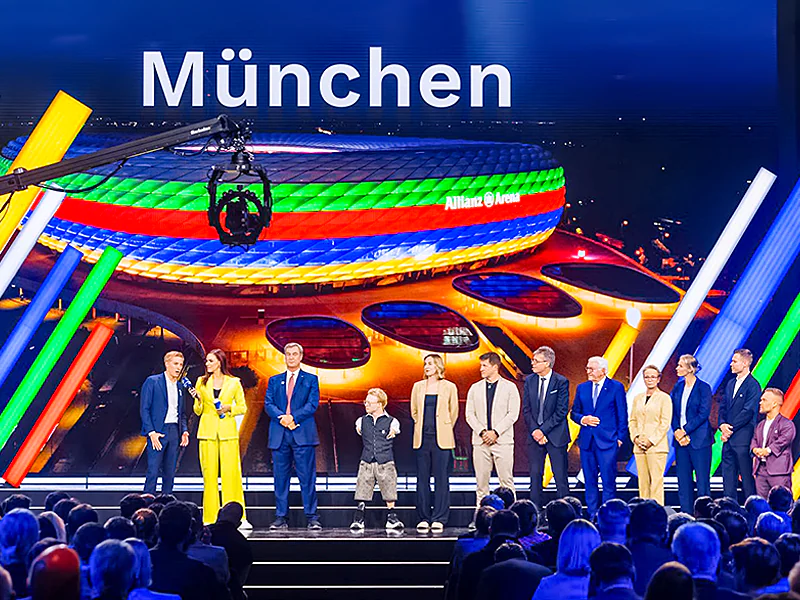
Munich has been confirmed as Germany’s candidate to host the Olympic and Paralympic Games.
The extraordinary general assembly of the German Olympic Sports Confederation (DOSB) selected Munich for the role, positioning the Bavarian capital to bid for the 2036, 2040, or 2044 editions.
This marks the start of the next stage in the journey to bring the Olympic and Paralympic Games back to Germany for the first time since 1972.
The DOSB said in a statement, “The Olympic and Paralympic Games are more than just the world’s biggest sporting event; they represent a tremendous opportunity for Germany. They move people, foster unity, inspire confidence, and generate momentum that extends far beyond the realm of sports—benefiting our society, our economy, and our country.
“We congratulate Munich on this outcome and thank all the bidding regions for their extraordinary commitment, passion, and strong concepts. It was a fantastic competition, conducted with a great sense of fairness, respect, and the values of sport. This is what our country stands for; this is what “Sport Germany” stands for.”
German President Frank-Walter Steinmeier announced the final vote in Baden-Baden, where Munich secured 90 votes to defeat the rival regional bid from Cologne-Rhine-Ruhr, which received 51 votes.
Berlin, another major contender, withdrew shortly before the ballot due to political instability and lower evaluation rankings.
The selection followed a rigorous internal evaluation process by the DOSB, where Munich scored 87 out of 100 possible points.
Munich for Germany
The concept for holding the Games in Germany is built on short distances, existing sports venues, and the unique Olympic legacy of the 1972 Games.
As in 1972, the heart of the concept is Munich’s Olympic Park, where around half of all competitions are set to take place.
Iconic locations defining Munich and the region, such as the English Garden, Nymphenburg Palace, and the Ordensplatz, are also integrated into the plan, bringing the Games right into the city center.
Sustainability and the long-term legacy of the Games are also central components of the concept. After the Games conclude, the Olympic and Paralympic Village is intended to become a climate-neutral, accessible, multi-generational neighborhood for more than 10,000 people. Furthermore, Munich aims to set new standards for sustainable, circular major events.
The city performed exceptionally well regarding venue readiness, infrastructure, and public support, bolstered by positive local referendum results.
The German government signed a joint declaration supporting the bid, ensuring federal backing for the upcoming international campaign.
Munich will now enter the official dialogue stage with the International Olympic Committee, competing against multiple international cities that have already expressed interest in hosting.
The IOC is expected to decide the host for the 2036 Games around mid-2029.
Munich will face competition from over 10 countries that have expressed formal interest or entered dialogue with the International Olympic Committee (IOC) for the 2036 Summer Olympic and Paralympic Games.
Because the IOC uses a multi-stage dialogue process, the field includes several front-running nations alongside early-stage contenders.
The primary international competitors include: Ahmedabad, India; Doha, Qatar, Istanbul, Turkey; Nusantara, Indonesia; Santiago, Chile and Riyadh, Saudi Arabia.
Continue following Coliseum for the latest updates on sports venues, stadiums and arena business news worldwide.
Coliseum is dedicated to building a global community of sports and entertainment venue professionals helping create better and more profitable venues.
Become a member of the Global Sports Venue Alliance and connect with stadiums, arenas and industry experts from around the world. Apply for membership through the Global Sports Venue Alliance and access the 365Coliseum Business platform.