


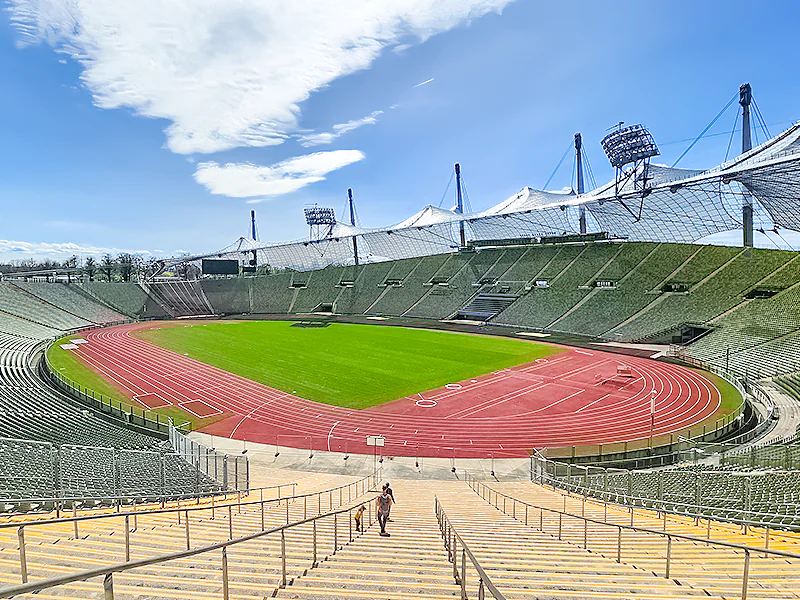
Munich (Germany) will bid to host the 2036, 2040 or 2044 Summer Olympics. This was the result of a referendum held on October 26th. According to initial counts, 62 percent voted in favor of a bid.
‘kicker’ stated that the existing infrastructure in the Bavarian capital will be used to host the competitions. However, it is also clear that additional and new sports facilities will need to be built.
In addition to Munich, Berlin, Hamburg and the Rhine-Ruhr Region are also aiming to bid in 2036, 2040 and 2044, respectively. A referendum is scheduled to take place in the Hanseatic City next May and in the Rhine and Ruhr Regions as early as April. In the Fall of 2026, the German Olympic Sports Confederation (DOSB) hopes to select a German bidder to enter the international competition.
‘kicker’ further stated that several countries worldwide have thrown their hats into the Olympic ring for 2036 and 2040. Munich holds good prospect nationally but what is the German City’s prospect on the international stage still remains to be seen.
However, the above referendum results show that the first hurdle has been overcome. The supporters have been campaigning for a fresh Olympic bid by Munich for years so as to showcase the City as a cosmopolitan and sustainable Metropolis. Furthermore, the modern Games with clear environmental standards and partly existing infrastructure would send a positive signal for the future nationwide.
The highly successful European Championships three years ago thrilled the people. The competitions held in the Olympic Stadium and the Olympic Park, in particular, brought back memories of the 1972 Olympics for many residents of Munich.
The 63,118-capacity Olympiastadion is a stadium located in Munich, Germany. Situated at the heart of the Olympic Park in Northern Munich the stadium was built as the main venue for the 1972 Summer Olympics.
At that time, Munich hosted the Summer Olympics – the only German City in the post-War period to do so. A bid to host the 2018 Winter Games failed and the Games went to Pyeongchang, South Korea. A renewed bid for 2022 was never even considered because several referendums voted against it. At other locations, too – such as Hamburg in 2015 – residents voted against it.
Record Participation
In Munich, a broad coalition campaigned for the referendum this time. By October 26th afternoon, it was clear that the referendum had likely reached the necessary quorum as over 30 percent of the eligible voters cast their votes by mail alone. Ten (10) percent would have been required for a legally binding referendum.
By 3:30 pm, the voter turnout totaled 37.8 percent representing a record turnout for a referendum in Bavaria. The previous record was set by the positive decision to build the Allianz Arena in Munich in October 2001 with 37.5 percent. Nearly 1.1 million of Munich’s 1.6 million residents were called upon and eligible to vote in the Olympic bid.
The Allianz Arena is a football stadium in Munich, Germany, with a 70,000 seating capacity for international matches and 75,000 for the domestic matches. Widely known for its exterior of inflated ethylene tetrafluoroethylene (ETFE) plastic panels it is the first stadium in the world with a full color changing exterior.
Continue to follow Coliseum for latest updates on venues business news. Coliseum is dedicated towards building the best global community of sports and entertainment venue executives and professionals creating better and more profitable venues.
Become a member of the only Global Sports Venue Alliance and connect with stadiums, arenas and experts from around the world. Apply for membership at coliseum-online.com/alliance and make use of the 365Coliseum Business.